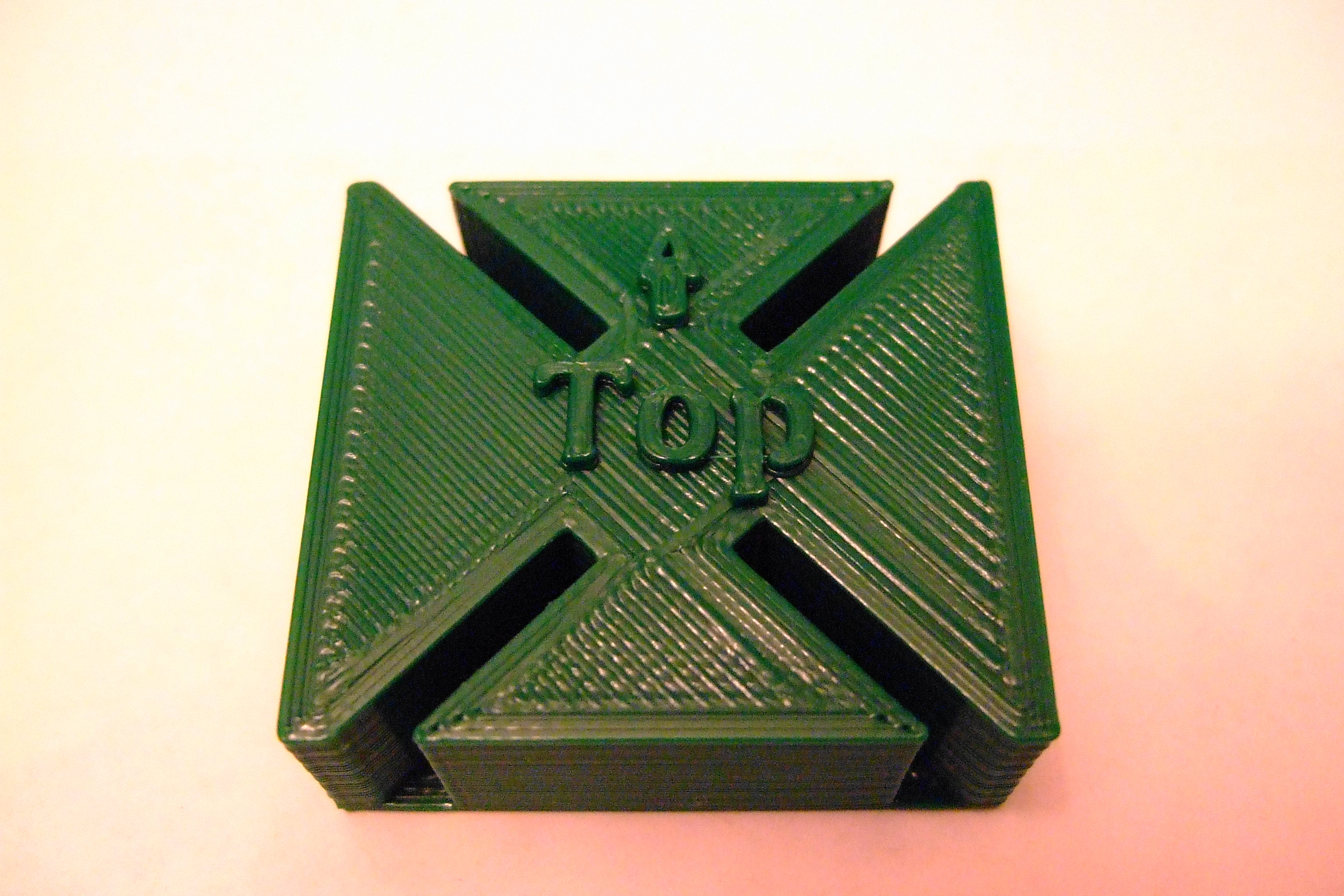
The Adafruit face shield almost fits if you orient vertically with a 45deg Z rotation. Its a a little too tall.
Import into Fusion360 and modify with shorter or no arms (just hooks for the elastic band).
The Adafruit face shield almost fits if you orient vertically with a 45deg Z rotation. Its a a little too tall.
Import into Fusion360 and modify with shorter or no arms (just hooks for the elastic band).
Greetings fellow Mini owner!
Having had my mini (now 2 of them) for several years I’ve come to realize that work-arounds must be made some time to compensate for the smaller build plate. As such, I’m working on splitting the Prusa RC3 edition of the face shield into two parts to fit the Mini and have designed a new cross attachment and matching receiving block for re-assembly into the whole headband.
Photos:
All the parts
So far, it looks like it’s going to work!
super! thanks so much, clever solution!
This is great thank you for doing this. Have you shred your design somewhere yet?
I printed several face shield headbands, including the Stratasys, the Prusa, and my own designs. When field testing with medical personnel, the one that they want and will use is the NIH design.
( https://3dprint.nih.gov/discover/3dpx-013359 ) The problems with most of the quicker print headband designs is that they allow droplets to come in over the top. Another big advantage of the NIH design over the Prusa is that it uses a standard three hole punch spacing for attaching the plastic shield. Using my Taz6, which has been giving me problems, I can print three on an overnight print, two during the day, and then I print five bottom attachments to mold the plastic shield. I use two or three 8" Velcro wire ties for a strap, Clear Front plastic from OfficeMax, and Foam Window Seal from HomeDepot to provide a a buffer against the forehead. I clean the headband with alcohol prior to attaching the window seal.
You can find the .stl files at:
Please note that this is the 4 holed EU version that uses A4 clear sheets, not the U.S. 3 holed version that uses letter sized (8 1/2 x 11).
I split this before I realized that there was a U.S. version.
Some of the face shield models take too long to print. Save precious filament. There is no time. Keep it simple. This is a 40 min print.
Started punching holes by hand to get a little more edge above.
Make a template. Center holes are 1" apart. 3.35" to center of first side hole then those 2 holes are also 1" apart. PVC sheets will not tear if assembled slightly warmed.
Some were worried about venting above. Save filament and let user cover with tape if concerned.
Yeah I found that version last night its Awesome! So simple yet so effective. Go straight to the source and you can download the stacked version (17, 35 or 52).
This is the 6 hole punch 17 stack:

Best to check if the masks are acceptable before printing too many. I’ve heard that some places will only accept the NIH approved DTM mask… in the US.
Here’s an interesting simulation of a sneeze… makes sense to have a closed visor that deflects any spray from the forehead.
Looks like it is! 
https://3dprint.nih.gov/discover/face-shield
Amongst other interesting face shield models.
I originally printed shields that did not have the closed visor and was told by doctors that they weren’t useful. It may take longer to print the NIH DTM face shield, but the ones I have been printed have generated a lot of interest by doctors and nurses. If I am going to spend the time and money, I want my output to be used, not sit on a shelf. I print three on a Taz6 overnight (11 hour print) and two more during the day, plus five bottom pieces, so I can produce five completed shields a day that will be used.
That’s an interesting site. Thanks for sharing.
It doesn’t look like NIH is very picky in their approval. 
My wife is a home-care nurse and prefers a mask with a closed top. So I started with the Prusa and switched to the Adafruit for the visor and 3-hole design… and now the NIH DTM mask.
My favorite design (I’ve printed several variations) is the Verkstan design for North America … well sort of North America.
The one drawback of this is that the pegs for the 3-hole punch are 8mm … which would fit a US 5/16" drilled hole. If you buy reams of 3-hole drilled paper, those are probably 5/16". BUT… if you own a 3-hole punch from an office supply store… those holes are closer to 7mm. So it’s a bit difficult to get the pegs through the holes.
I’ve contacted Eric at Verkstan about this to see if he can tweak down his posts to 7mm instead of 8mm to make it easier to fit.
As for that “open” top.
I own a Cricut Maker cutter. My other half designed a shield cutting pattern for this (he could change the hole sizes… but he wants his pattern to work on ANY North America shield design… and not need an odd size for one particular headband).
His design cuts two shields… the main visor is the standard flat across the top with 3 holes. The bottom corners are rounded.
The upper-visor is a sheet of visor material with a slight “v” shape (not a straight line) and the 3-holes slightly angled. When attached to the top (on the same 3 mounting posts) it causes the shield to angle back over your hair-line. This shields the top from droplets “raining” through the gap … without requiring lots of extra printing time.
He gets away with this on the upper holes because he’s using a Cricut Cutter (basically a CNC cutting machine for home crafters). You can easily do that with a normal 3-hole punch. But what you CAN do is cut punch a standard 3-hole punch and then cut a vertical slice on the center-line … then fold the two sides into over-lap and use a paper-clip to hold them in place. That would also result in the top being angled back to shield water droplets from being able to rain down through the gap.
Two binder sheets is an interesting design. Faster than a printed top shield.
I’m waiting for a flip up mask… preferably a “print-in-place” to highlight the 3D printing aspect. But, alas, this is not a time for innovation just speed of print.
My sister-in-law in London shared a story that a nurse was fired for wearing a face-shield during the shortage. Apparently, the facility banned the use because there wasn’t enough for every staff member… therefore no-one could use them.
Good point on knub size. I just made a smaller peg version and added it to the thingiverse link.
There is also a printable sheet marking template. Mark it with a sharpie then use a single hole punch. This gives more material above.
Tips to user
-Cold sheets tear during assembly. Hopefully the smaller peg version helps.
-Shove a paper towel in if they are worried about splash from above. Print time and filament are precious now.
Let me know.
If you own a Cricut Maker and want the face-shield design, here’s the info (courtesy of my better half):
Face Shield Film for Cricut Maker
Recommended: Dura-Lar CLEAR 0.005" (5mil) on 11x14 and 12x9.
NOTE: This is a polyester film, which is durable and stands up to harsh chemicals like hydrogen peroxide, isopropyl alcohol, and bleach.
DropBox link for original SVG design and PDF’s:
11x9.5 Shield and Forehead Cover on 11x14 RC4
https://design.cricut.com/landing/project-detail/5e88dcf68e77390cd0f3eb54
For cutting Face Shields for COVID-19 medical practitioners.
These fit most 3D-printed, US 3-hole 11" wide face shields.
I had to offset the 11x14 film by 1/4" in each direction at the upper left of the 12x24 cutting mat, which is to workaround a limitation of the Cricut Maker (there is no way to remove the margin). Suggest cutting a piece of light card stock first, remove the shield parts and use a sharpie to mark the corners of the margin, then use those marks when placing the 11x14 film.
I revised the smaller peg part and replaced. The first attempt also took material off the arms. I adjusted each peg separately this time.
Please let me know if it helps with tearing and assembly.
I put my name on the Matter Hackers list last week. They contacted me today to print off a batch. They’re asking for the Verkstan design for North America 6 hole design. And as a bonus they just need the 3D printed frame and they’ll supply the clear shield.
The TecLens company in Stamford, CT is sharing their .stl files for face shields and asking the Maker community to help them keep up with demand. Once they’re printed, they ask for them to be mailed to their offices for final assembly before they deliver them to area hospitals. https://www.teclens.com/